
Equipment
Equipment & Capacity
One grapple truck, one operator, and a straight answer about how much fits in a load.
The truck
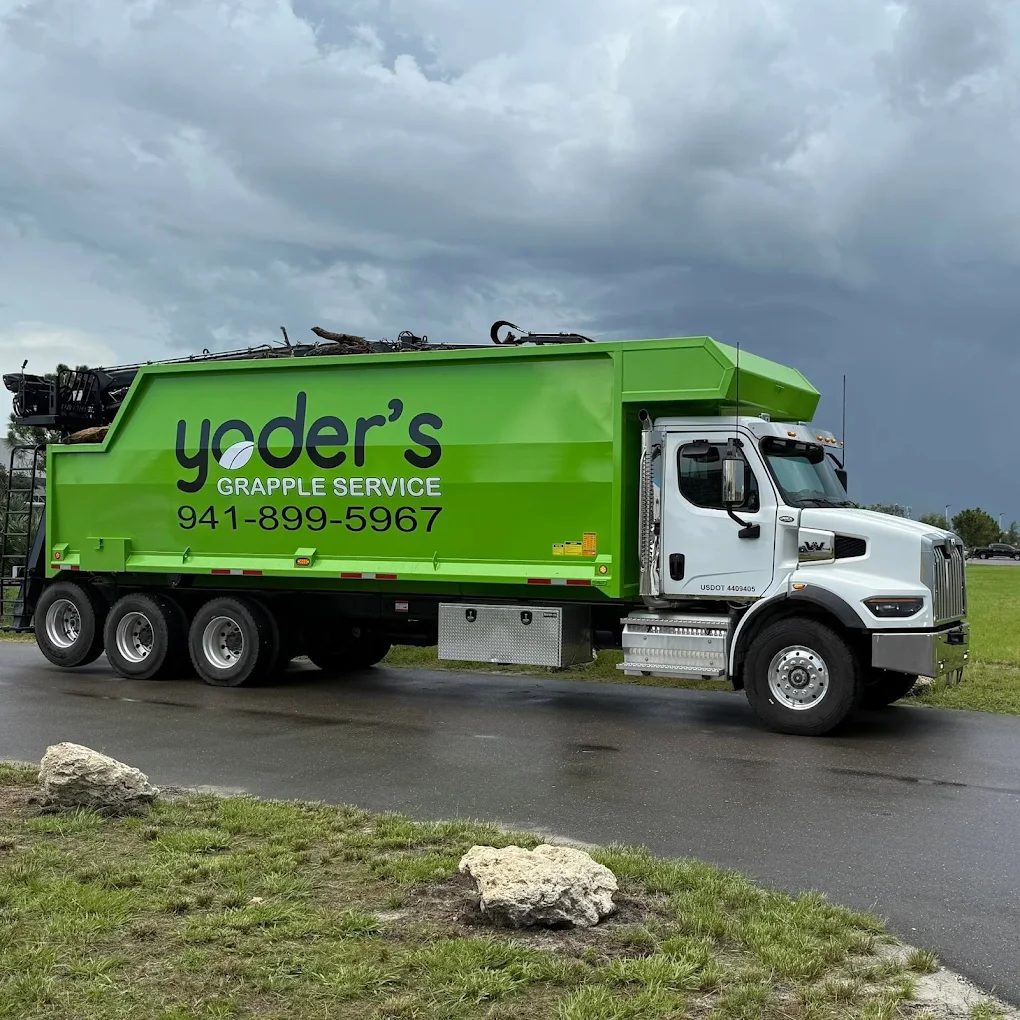
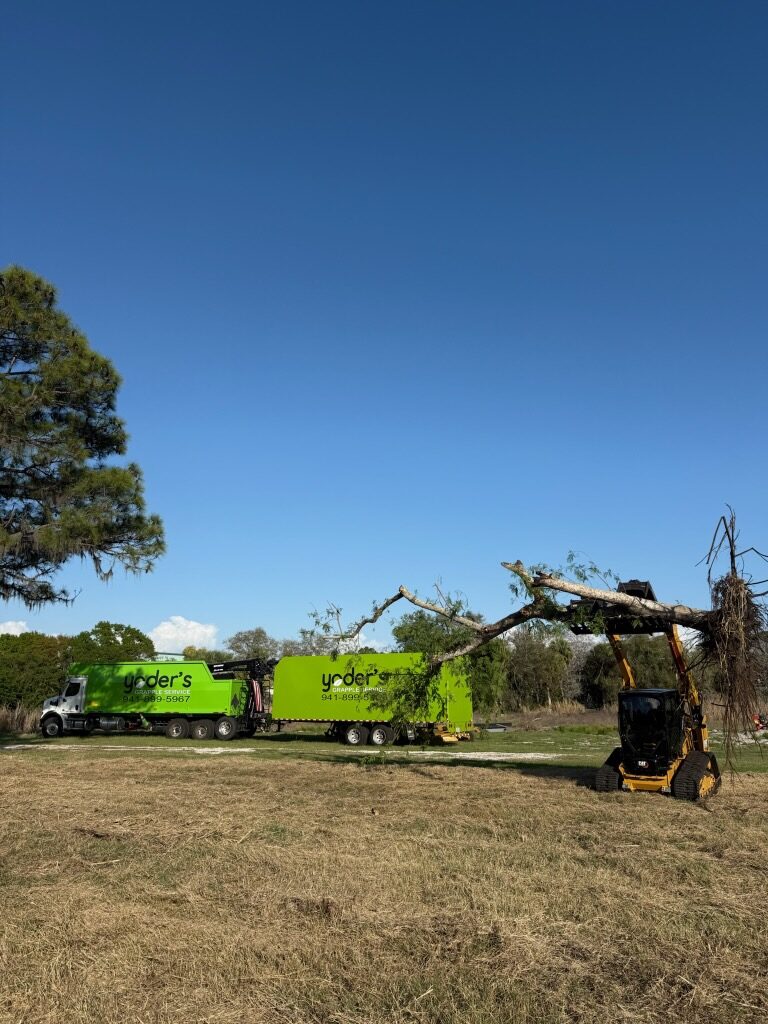
We run a 70-yard grapple truck with an 80-yard trailer. The grapple is a knuckle-boom loader mounted behind the cab: it reaches out, picks material up, and drops it into the box. Nothing gets lifted by hand and nothing needs your loader to feed it.
It is one truck. That is deliberate, not a limitation we are hiding — one truck means the owner is on the controls every time, and you never get a driver who has never seen your site before. It also means capacity is finite, which is why booking ahead matters in a busy week.
If the yardage is still abstract, the photo gallery shows the same rig mid-lift on real job sites — the reach, where the truck has to sit, and how a full box actually packs.
What that holds in practice
Yardage is hard to picture, so here is the useful version:
- A single residential takedown — trunk sections, limbs and brush from one mature tree — is normally one trip.
- An ordinary brush or hedge pile from a day of crew work is comfortably one trip, often with room left over.
- A multi-tree removal or a cleared lot is where it becomes two or more. We will say so on the phone.
- Storm debris across several addresses gets routed as a run rather than counted as one load.
The honest guidance: if you are wondering whether it is one load or two, it is probably two, and it costs you nothing to have us plan for two.
Send a photo. It settles it.
Every description of a pile is optimistic. A photo taken from across the street, with something recognisable in frame for scale — a truck, a fence, a person — tells us more in two seconds than five minutes on the phone.
Text or email one before you book and we will tell you how many trips we think it is and how long we will be on site.
Access: what decides where the truck can sit
A grapple has reach, which solves a lot of access problems, but it is still a large truck with a trailer. Tell us about any of these when you call and we will plan around them instead of discovering them:
- Overhead lines. The boom goes up. This is the one that matters most.
- Gate and driveway width, and whether we can turn around or have to back out.
- Soft ground, fresh sod, septic fields and irrigation. Weight on the wrong ground makes an expensive repair out of a cheap haul.
- Low branches or a canopy over the approach.
- Where we can legally stop if the pile is street-side.
- Gated communities — the gate code or the guard procedure.
You do not need to prep anything
Material does not need to be stacked, sorted or cut to a particular length. Pile it and we will take it. The only thing that genuinely helps is keeping the pile away from the fence line and out from directly under wires.
Not sure it fits?
Send a photo and a city. You will get an honest answer, including if the answer is that you need a different truck.